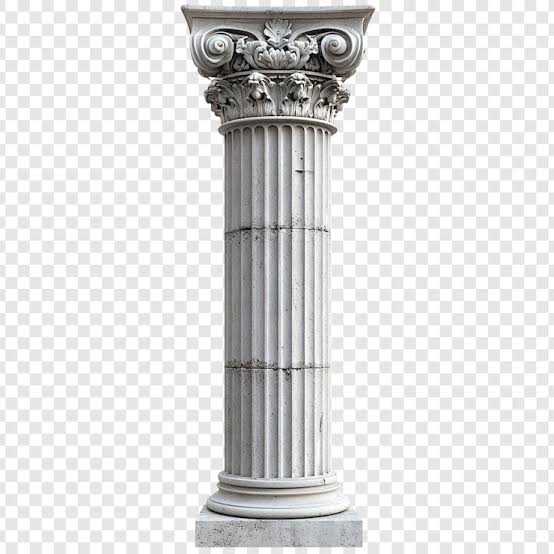
Every repair is a conversation with the building. The question is not "how do I attach new stone to old?" but "how did the original mason intend this structure to behave?" When the answer is compression — stone bearing on stone, mass supporting mass — then the repair must honour that principle. Anything else is decoration pretending to be structure.
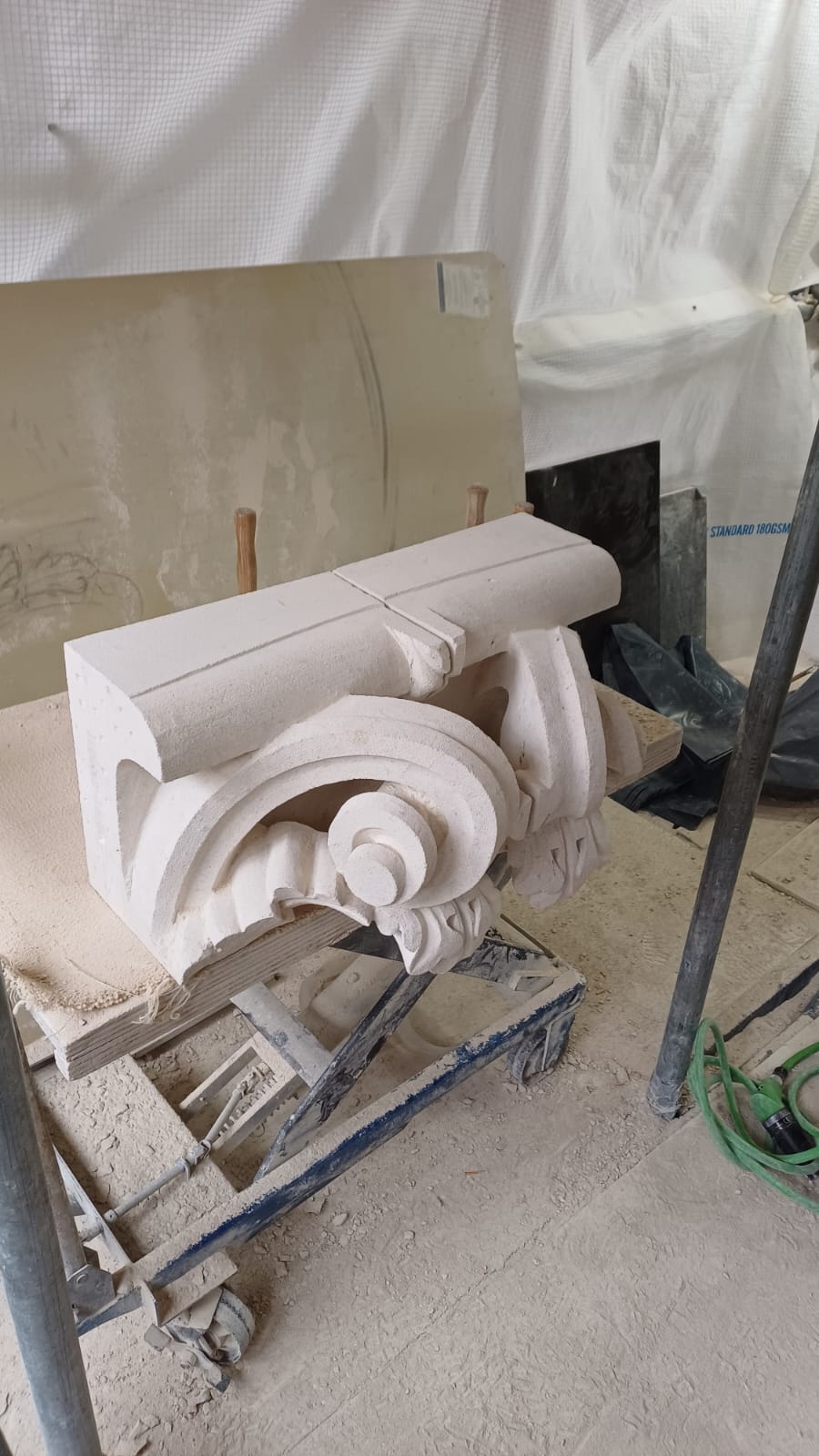
Stone repair in progress — the replacement piece is cut to sit within the wall, bearing load as the original did.
The Principle
Stone is at least partially embedded within a mass of masonry and in compression. A repair that respects this — stone bonded into the wall, carrying load as the original did — will outlast any surface-fixed patch by generations.
The Problem with "Sticking Bits On"
There is a pervasive approach in modern stonework repair that I call sticking bits on — the practice of fixing thin stone pieces to the surface of a building using metal dowels and injectable chemical mortars. It looks like a repair. It photographs like a repair. But structurally, it is something else entirely.
These methods rely on two things that time reliably destroys: the bond strength of a chemical adhesive and the integrity of a metal pin inside a material that moves with moisture and temperature.
Resin Degradation
Chemical mortars are polymers. UV exposure at edges, moisture cycling, and thermal stress cause embrittlement within 15–30 years. The bond fails silently — invisibly — until the piece falls.
Differential Thermal Movement
Stainless steel expands at 17.3 μm/m/°C. Limestone at 4–8. A 40°C seasonal range puts the pin in perpetual shear against the stone it's meant to hold. Micro-cracking propagates from the dowel hole outward.
Installation Quality
A dowel repair demands precision: clean holes, correct depth, proper resin injection with no air pockets, exact alignment. In practice — scaffolding, weather, time pressure — they are too often botched. A single void in the resin and the pin carries nothing.
Safety Risk
When a traditionally bedded stone fails, it shifts visibly before it falls — mortar joints crack, the piece telegraphs distress. A dowel-fixed piece gives no warning. It is either attached or it isn't. On a building 30 metres above a pavement, this distinction matters.
The Traditional Alternative
A properly conceived traditional repair works with the building's own physics. The replacement stone is cut to fit within the masonry — not on top of it. It sits in compression, supported by the mass below and restrained by the mass beside it. The joint is lime mortar: flexible enough to accommodate centuries of thermal movement, soft enough that the stone — not the joint — remains the sacrificial element if something must give.
300+
Years proven lifespan
Zero
Mechanical fixings
100%
Reversible
This is not nostalgia. It is engineering — the same engineering that has kept medieval cathedrals standing through 800 winters. The mortar is weaker than the stone by design: it absorbs movement, it allows moisture to pass, and when it does eventually decay, it can be raked out and replaced without touching the stone. The repair is fully reversible. No drilling. No contamination. No hidden metal corroding inside the fabric.
The Discipline of Restraint
Not every damaged stone needs replacing. Weathering is not failure — it is patina, it is age, it is the building's biography written in its surface. The question for the conservator is always: is this stone still doing its job? If it is structurally sound, if water is not penetrating the core, if the decay is stable and self-limiting — then the answer is to leave it alone.
Conservation Principle
"Where there is doubt, it may be better to leave well alone until such a time as a proper repair can be made."
A bad repair is worse than no repair. It consumes budget, introduces new failure modes, and — critically — it removes the option of doing the work properly later. A resin-fixed piece cannot simply be lifted out and redone. The original stone behind it has been drilled, contaminated, weakened.
This patience is not inaction. It is the hardest professional judgement a stonemason can make: to tell a client that the best thing to do right now is nothing. That the building is better served by monitoring, by waiting for the right season, the right access, the right budget to do the work once and do it permanently.
What a Proper Repair Looks Like
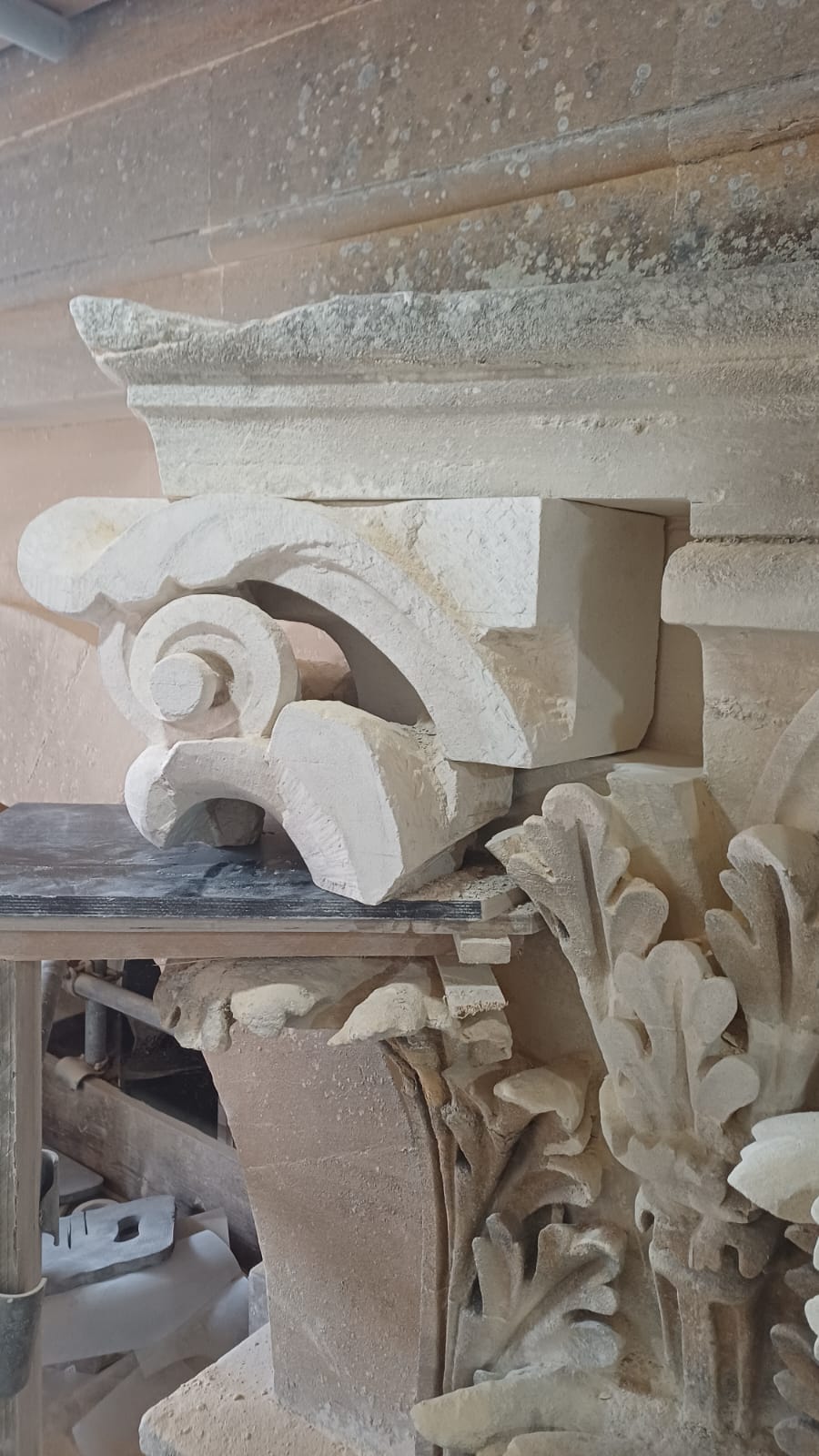
The finished repair — stone bedded in lime mortar, flush with the surrounding masonry, indistinguishable at distance.
The process begins with understanding the original construction: the stone type, the bed orientation, the mortar composition, the structural logic of the wall. Only then can you design a repair that behaves as the building expects.
The Process
Survey & record. Document the decay pattern, original tooling marks, bed heights, joint widths. Photograph. Measure. Understand what you're looking at before you touch it.
Match the stone. Same geological formation where possible. Grain direction matters — a stone bedded against its natural bed will delaminate within a decade. Colour matching comes last; structural compatibility comes first.
Cut to embed. The new stone must sit within the wall, not on its surface. Minimum 100mm embedment for a facing stone. Deeper for structural elements. The geometry locks it in place before the mortar sets.
Bed in lime. Hydraulic lime for structural loads, non-hydraulic for sheltered positions. The mortar is mixed to match the original — not just in colour but in aggregate size, binder ratio, and compressive strength. It must be weaker than the stone it touches.
Finish to context. The surface treatment matches what surrounds it: if the adjacent stones show 200 years of gentle weathering, the new piece is worked back until it reads as part of the whole. The repair should be findable by a specialist with a torch — but invisible to a visitor at ground level.
Long-Term Value
A traditional repair costs more upfront. It takes longer. It requires a mason who understands historic construction — not just someone who can operate a pointing gun and a drill. But it lasts. Not 20 years. Not 50. Centuries.
Mechanical Fixing
15–30 year lifespan. Relies on resin bond + metal pin. Not reversible without damage. Gives no warning before failure. Often installed incorrectly. Cheaper now, expensive later.
Traditional Bedding
300+ year proven record. Stone in compression, lime mortar joints. Fully reversible. Telegraphs distress before failure. Requires skilled mason. Costs more now, costs nothing for generations.
The client who commissions traditional work is not paying for nostalgia. They are paying for durability, for authenticity, for a repair that respects the building's logic and adds to its lifespan rather than introducing a new countdown. They are paying, ultimately, for the privilege of handing the building on in better condition than they found it.
The Standard
A well-conceived and well-executed repair, made with care, with traditional mortars, is always my favoured approach. It may not always be possible — but where there is doubt, it may be better to leave well alone until such a time as a proper repair can be made.